MOUNTAIN STEEP ROOFTOP HIGH | PRIVATE RESIDENCE | CAPE TOWN
Anchoring a powerful building
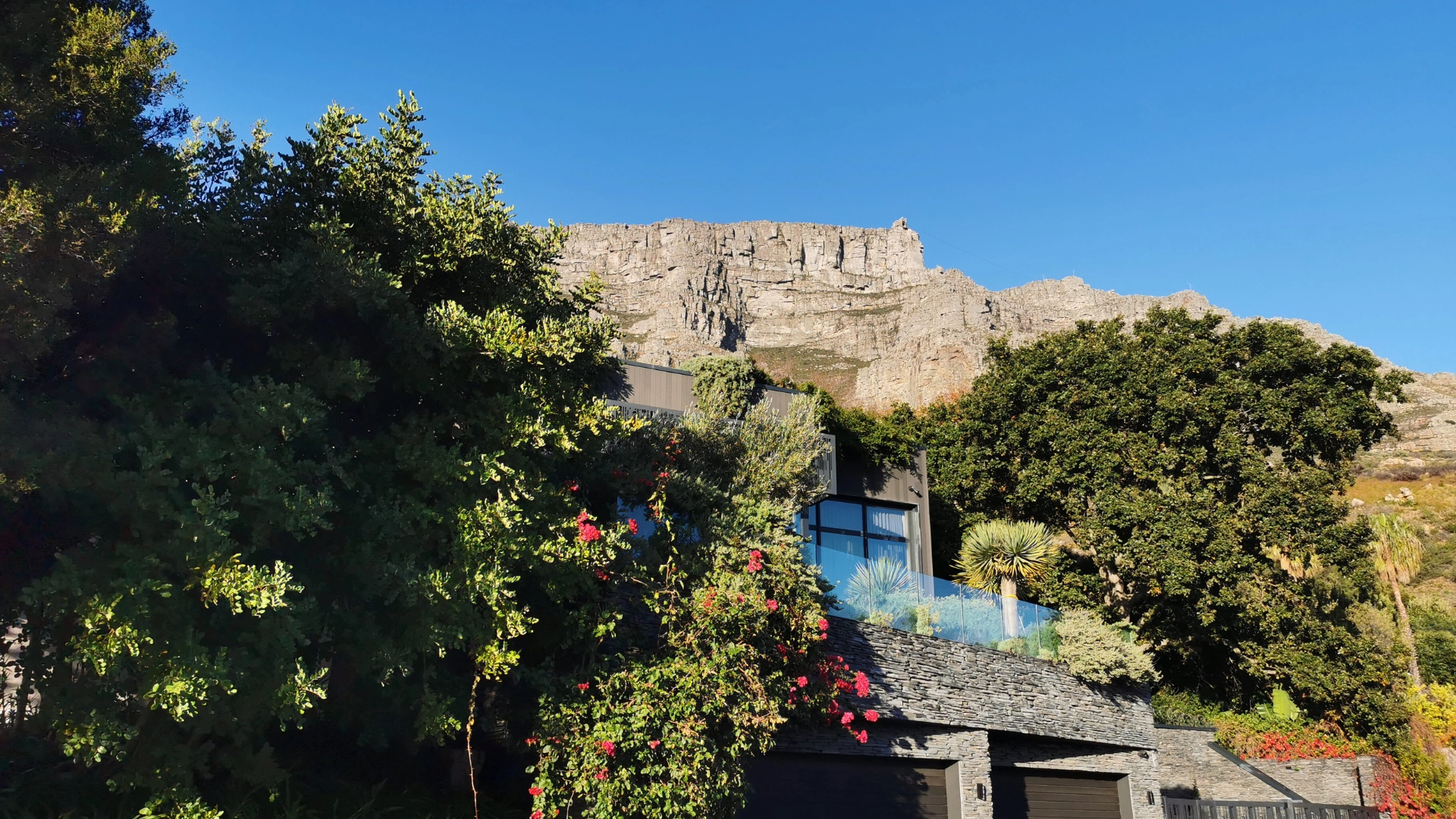
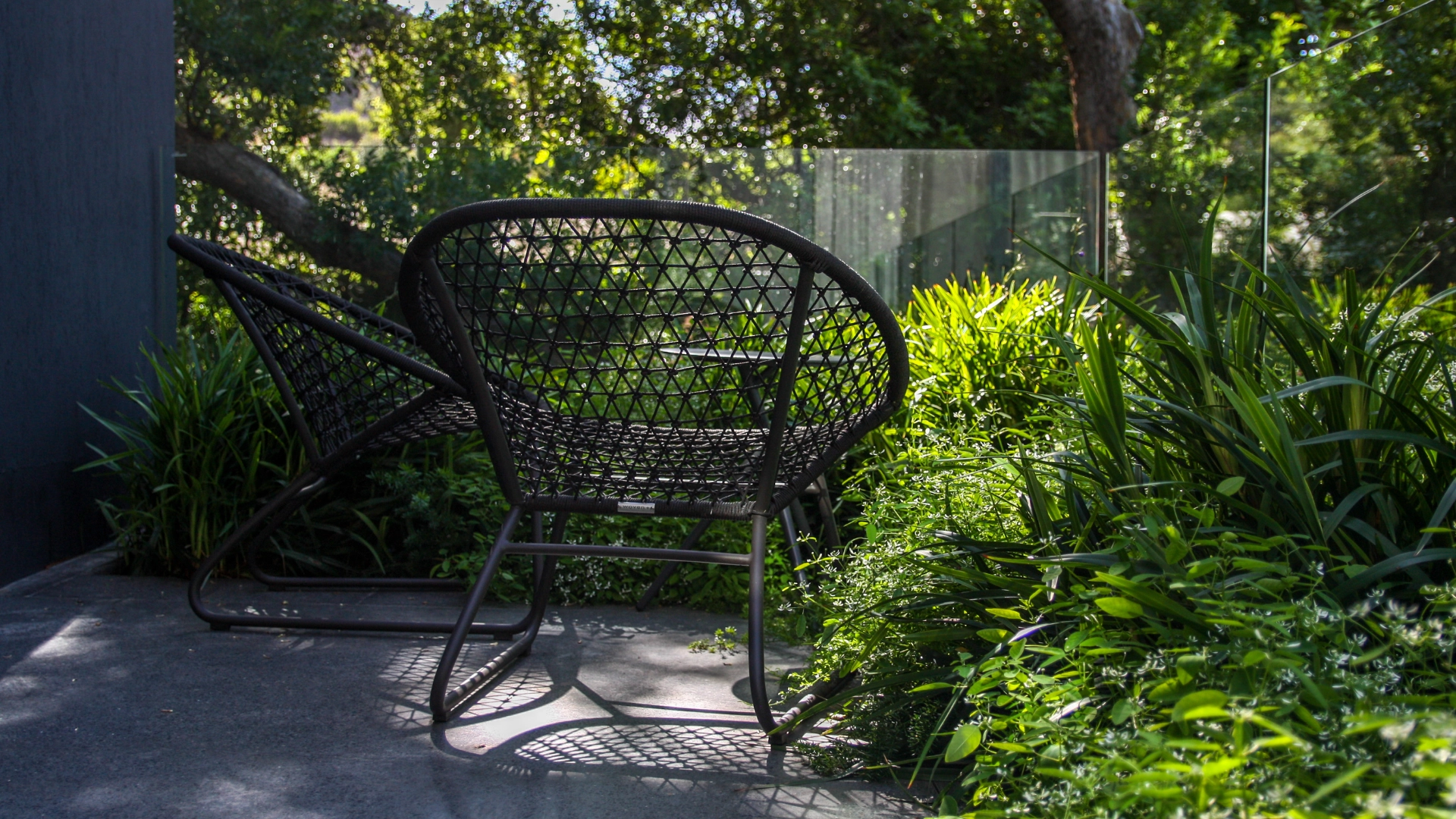
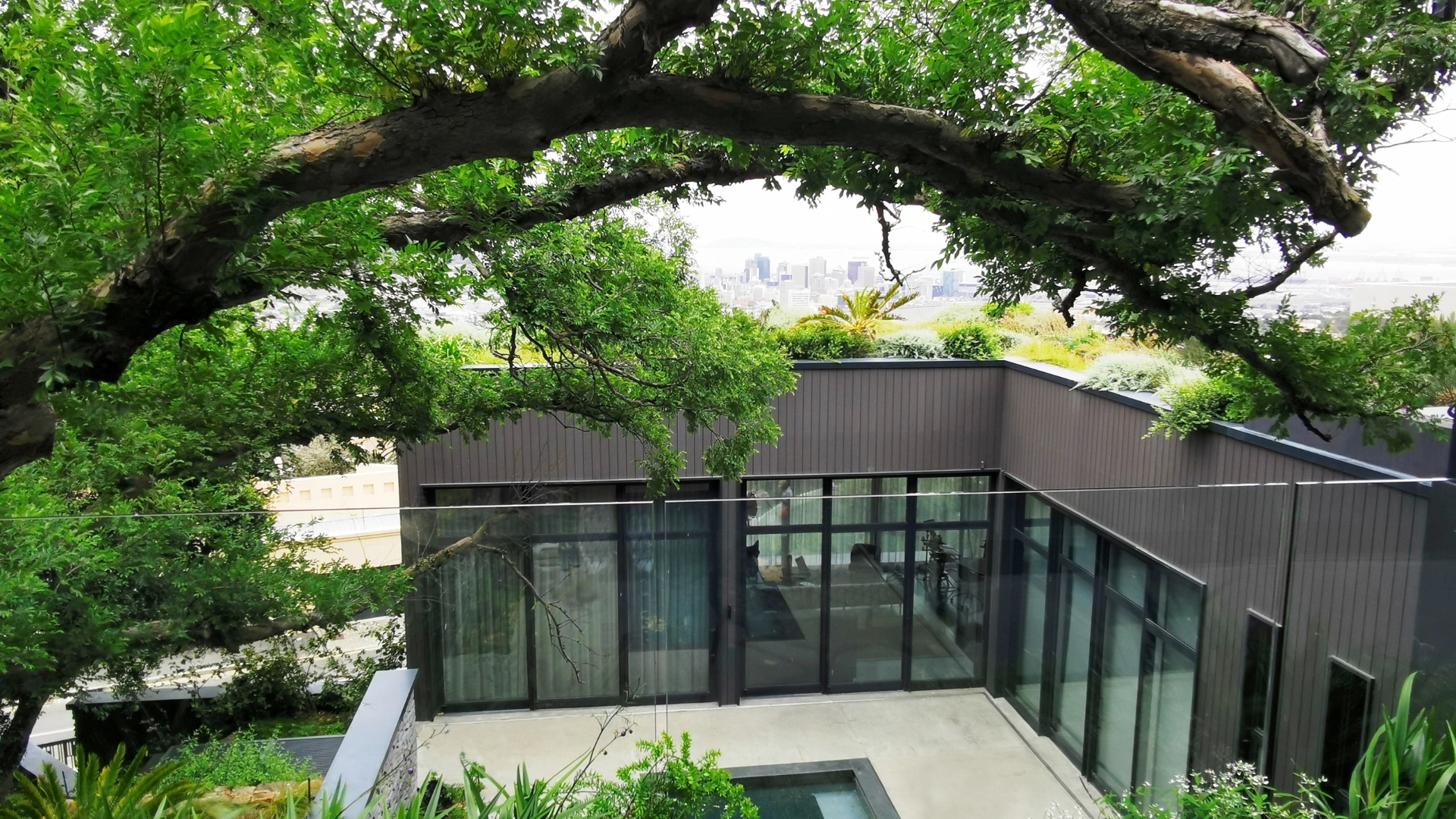
Situated on the last urban edge between Cape Town City and Table Mountain, the solution was to allow the textures of the natural vegetation directly butting up against the site to cascade down and around the new home without changing the terrain too much. Remaining sandstone steps and pathways were retained and added to, but a series of small square lawns edged in dressed sandstone brought a measure of order to the back patio area, acting as a ‘drawbridge’ between the strong geometry of the house and the natural vegetation of the mountain slope.
The new home was built around a hero-tree in the centre of the erf and sported a number of roof gardens. Our brief was unusual with ‘nots’ instead of inclusions.
Refreshingly, we were instructed “not too many flowers”, only enough lawn to satisfy one small dog, “make it interesting” and to soften the roof parapets.
Design Challenges
- Narrow spaces, wind funneling and winter shade issues: With the tall building taking up a major portion of the erf, re-interpreting our local flora which are adapted to sunny and exposed conditions, for areas that would lose much of the sun in winter required a plant selection that could adapt to such conditions.
- Steep slopes: Embedding steps through planting adds interest and movement to a garden, drawing the residents into and through the landscape.
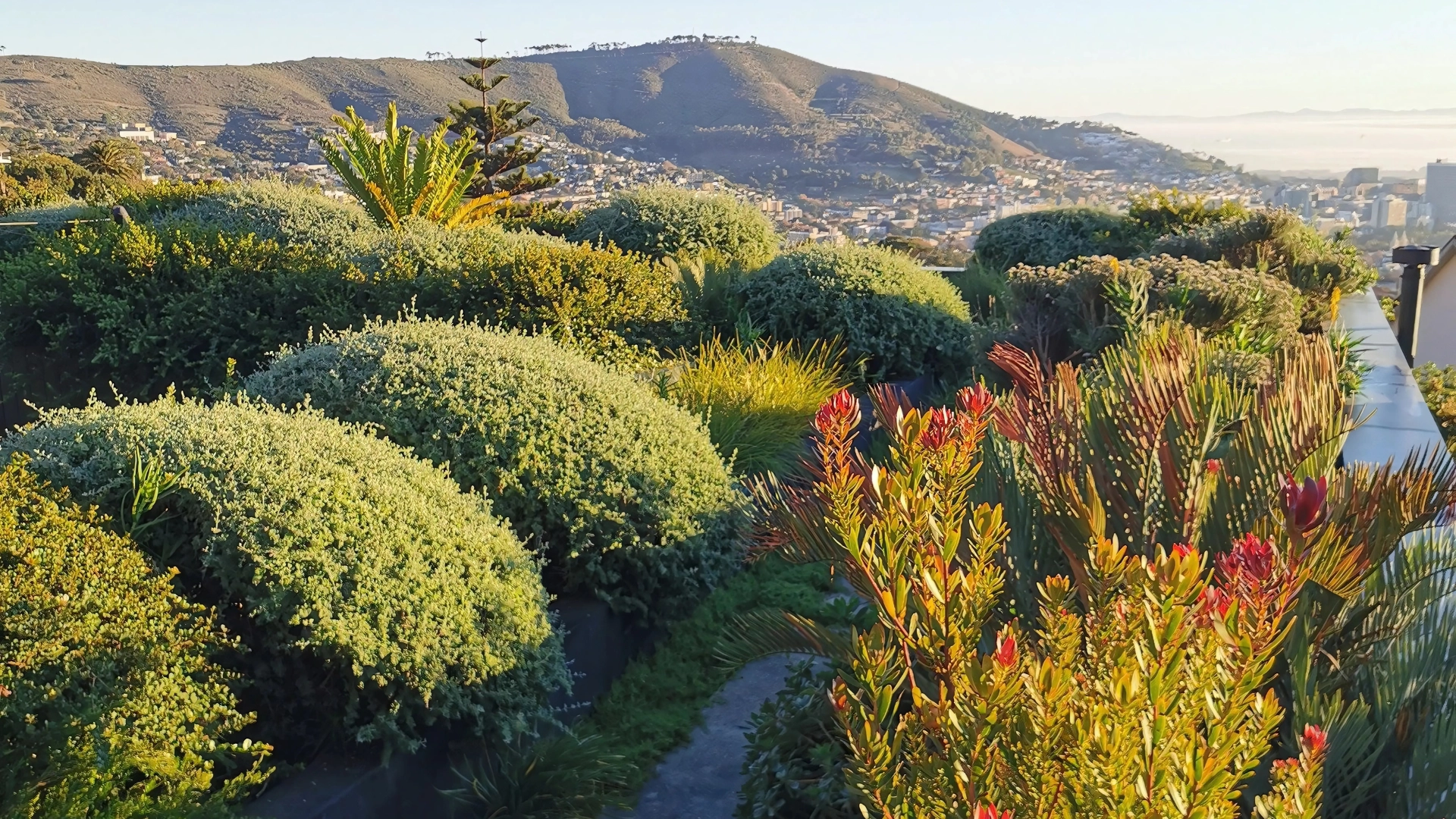
- Clothing the parapets: Required a palette of shrubs with sprawling growth habits rather than groundcovers.
Our Approach
- Hero Tree Context: Our first order of business was to create context for the hero tree – a beautiful Chinese elm specimen. Although exotic, they are one of the few deciduous trees that in years past were locally available that cope with the Cape’s windy conditions. It was given a terraced area that had only one purpose and that was to celebrate this beautiful tree. The only human use was a pathway past it to better worship its changing faces.
- Wrap-around Access: We designed wrap-around access across the whole site with staircases and pathways. These pathways provide the route to journey through the garden. We kept all stonework as sandstone so that we could retain stone already on site, reducing both labour and consumption of new materials.
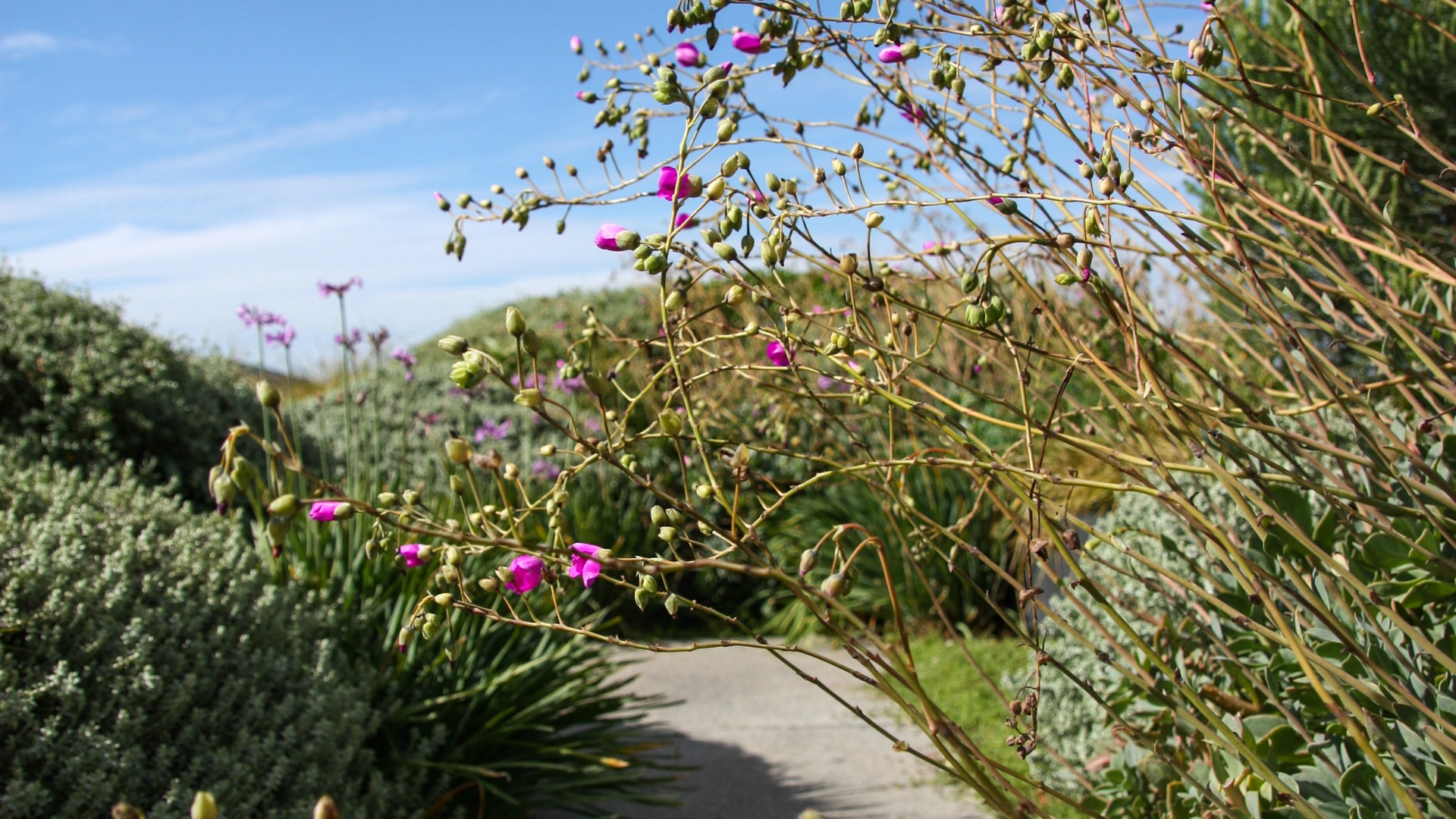
- Strategic Planting: Plants were selected specifically for their foliage interest and their ability to cope with the seasonal wind and shade changes where necessary. This required diversion from a strictly indigenous palette, but nonetheless integrates well with local conditions. Plants that are prodigiously floriferous were avoided.
Design Highlights
The garden successfully connects the contemporary architecture with the rugged Table Mountain landscape through a cascading design of natural vegetation.
The presence of a cherished hero tree, a Chinese elm, is celebrated with a dedicated terraced area, providing a serene focal point.
Sustainability in Practice
The approach minimised the consumption of new materials by retaining and adding to existing sandstone steps and pathways. Plant selection focused on species resilient to wind and shade, reducing the need for constant intervention.
Installation Timeline
Installation phased around the construction team with filling of roof gardens first while the construction crane was still on site, then moving to the structural items on the natural ground level. Planting completed while building in completion phases.
Team
- Architecture: Gerd Weideman Architects
- Landscape Design & Build: Cara Smith Landscape Design
PREVIOUS PROJECT
COASTAL STONE RETREAT | PRIVATE RESIDENCE | LLANDUDNO
NEXT PROJECT
HOUT BAY HAVEN | PRIVATE RESIDENCE | CAPE TOWN

